Trump renews attack on Orsted's Revolution Wind
Trump renews criticism of Orsted's Revolution Wind project amid ongoing political opposition to offshore development.
At a Glance
- Trump has reiterated opposition to Orsted's Revolution Wind project.
- Political headwinds continue to threaten offshore wind permitting and development timelines.
- Modern offshore turbine blades now exceed 115 meters in length, enabling higher capacity factors.
- Project viability hinges on navigating regulatory and political uncertainty in addition to engineering challenges.
Political Risk Compounds Technical Momentum
The offshore wind sector faces a persistent obstacle that no engineering advancement can solve: political opposition at the highest levels. Orsted's Revolution Wind project has become a focal point for renewed criticism, reflecting broader resistance to offshore development regardless of its technical maturity. When decision-makers use platforms to challenge specific projects, it creates uncertainty that ripples through financing, permitting timelines, and supply chain commitments.
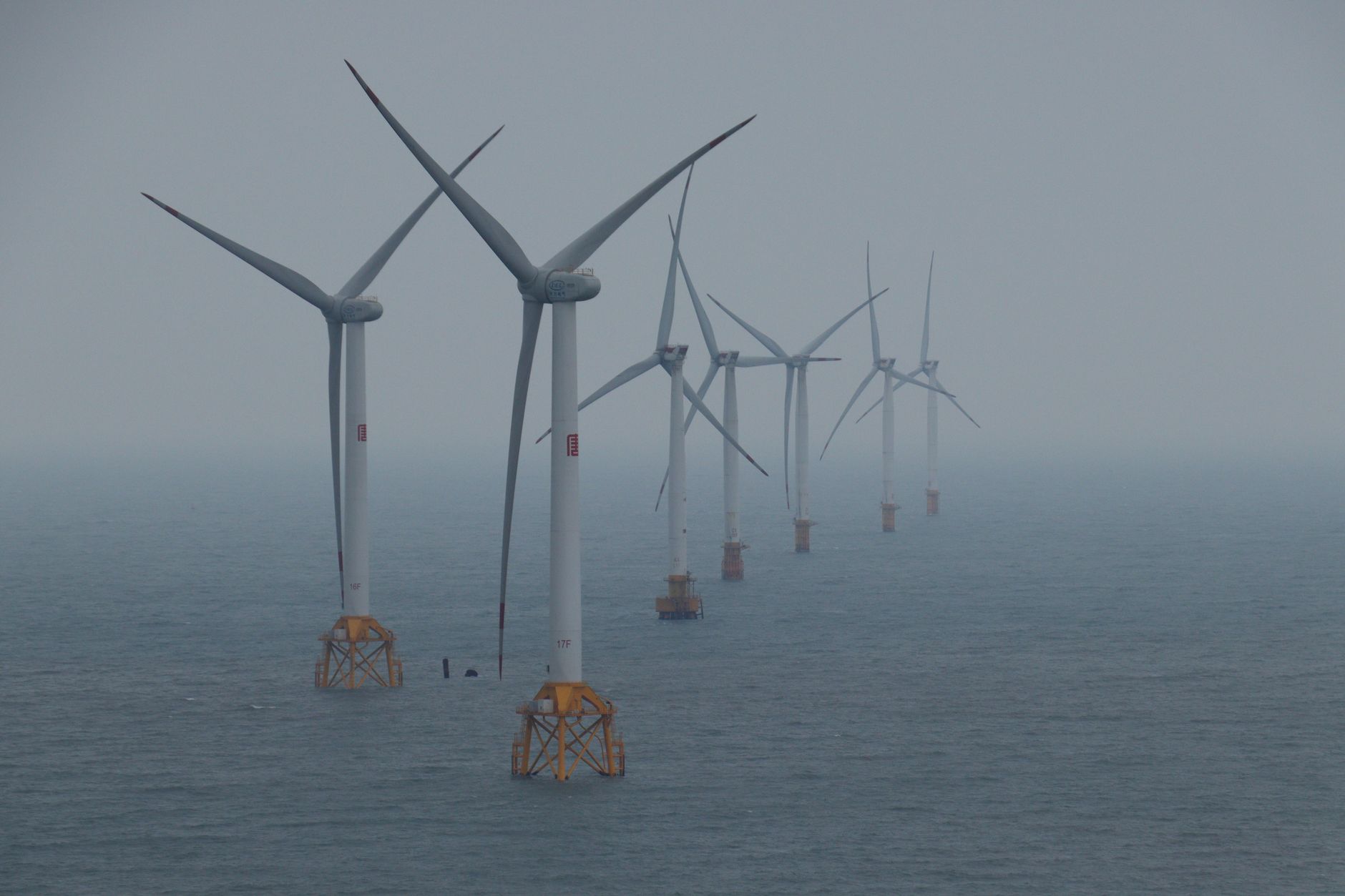
The irony is sharp. Modern offshore turbines have become engineering marvels—blades now routinely exceed 115 meters in length, dwarfing a football field. These extended spans translate to higher swept areas and improved capacity factors, making projects economically competitive and productive even in moderate wind regimes. The technology itself is proven and scaling reliably across installed bases worldwide.
Where Opposition Meets Operations
For a project like Revolution Wind, technical soundness is necessary but insufficient. Developers must simultaneously manage blade logistics, grid interconnection studies, foundation design, and installation planning while absorbing political noise. This creates a two-front challenge: execute engineering excellence while demonstrating project viability to stakeholders increasingly wary of extended development cycles and regulatory risk.
Orsted and peer operators have learned that opposition, whether grounded in coastal concerns or broader policy shifts, can stretch timelines and inflate costs. Permitting uncertainty defers long-lead equipment orders, strains supply partnerships, and complicate workforce planning. A 115-meter blade takes years to source and stage; that supply chain has no patience for ambiguity.
The Longer Game
Offshore wind advocates and developers have built a compelling technical and economic case. Cost curves continue downward. Blade technology and installation methods improve annually. Grid operators are learning to integrate large capacity additions. Yet political cycles move on different timelines, and individual projects become proxies for broader ideological debates.
For crews working on offshore wind—engineers, installers, supply chain professionals—the lesson is clear: excellence in design and execution matters, but so does the political and regulatory environment. Revolution Wind's fate will ultimately be decided not in the engineering office, but in the permitting room and the political arena. That's a reality no turbine specification sheet can overcome.
Enjoyed this one?
Get the next MW Daily entry straight to your inbox.
mwdaily.energy — no spam, unsubscribe anytime