Recharge News | Recharge
Offshore wind gears up for scale expansion as turbine technology pushes blade lengths past 115 meters.
At a Glance
- Modern offshore turbine blades now exceed 115 meters in length — longer than a football field.
- Blade scaling represents a critical strategy for improving capacity factors and reducing levelized costs.
- Longer blades capture more wind resource at greater heights, enabling deployment in lower-wind zones previously considered uneconomical.
- Manufacturing, transport, and installation of massive rotor assemblies remain primary engineering and logistics challenges.
The Case for Going Bigger
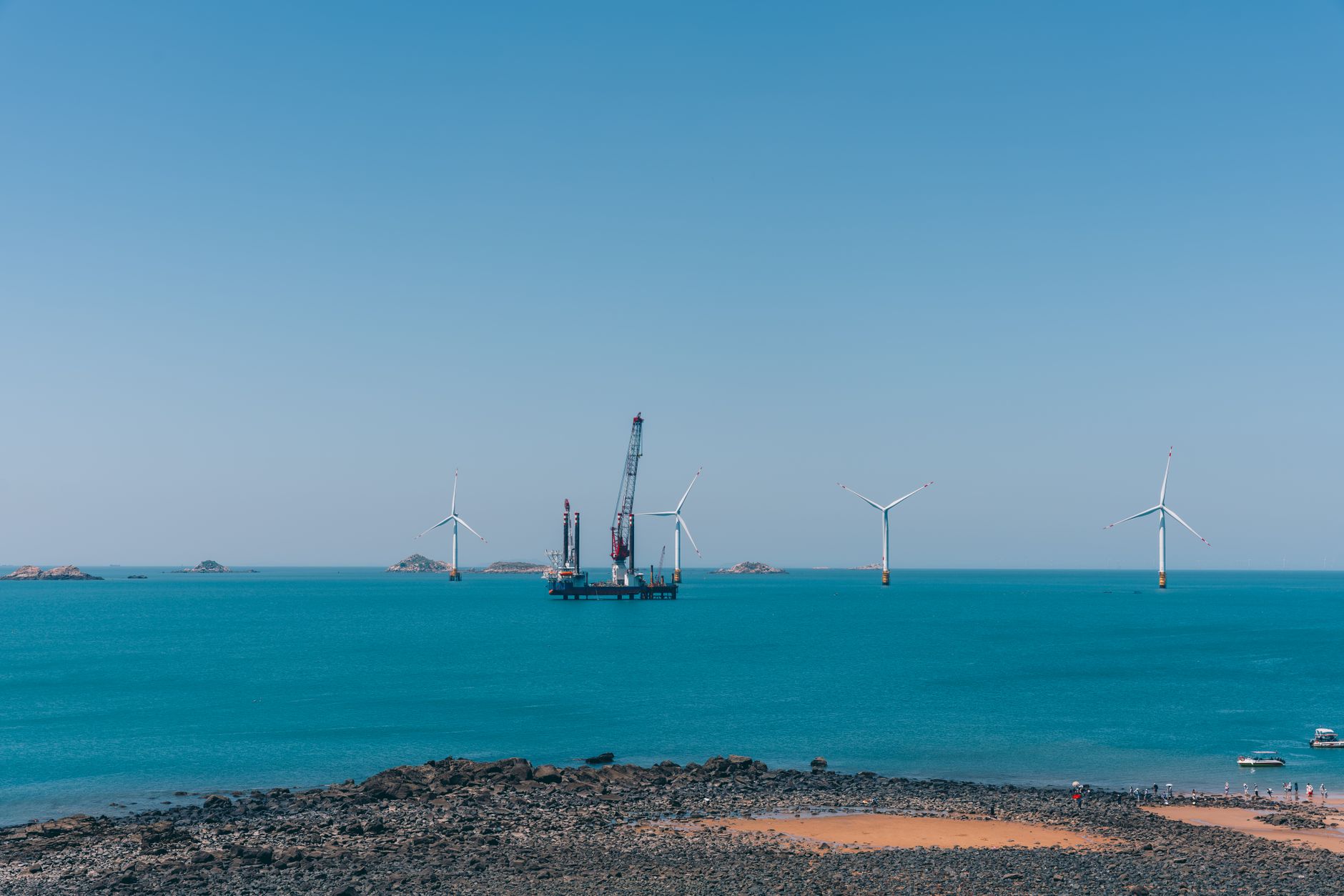
Offshore wind turbine design has entered a phase where sheer scale functions as an economic multiplier. Modern rotor blades now stretch beyond 115 meters — a length that exceeds a full American football field — fundamentally reshaping how the industry thinks about resource capture and project economics. This upward trend reflects hard lessons learned: taller rotors operating at higher elevations encounter more consistent wind speeds, translating directly into improved capacity factors and lower cost per megawatt-hour.
The physics are straightforward. Doubling blade length increases swept area by a factor of four, allowing turbines to extract substantially more energy from the same wind regime. For offshore sites where wind is premium and stable, this scaling effect creates compelling returns that justify the engineering complexity and capital intensity.
Manufacturing Reality Versus Design Ambition
Lengthening blades introduces tangible manufacturing and installation headwinds. Composite structures at this scale demand precision fabrication, quality control, and logistical solutions that remain unsolved in many regions. Transportation to port, staging, and installation vessels all require capability upgrades. Fewer suppliers can handle these components, creating supply-chain bottlenecks that can delay projects or inflate costs.
Globally, blade manufacturers are scaling production facilities and investing in automation to meet demand. Yet the transition from prototype to serial production remains capital-intensive and time-consuming, particularly as different markets adopt varied design standards and certification requirements.
Where This Unlocks Value
The strategic payoff emerges in sites with moderate wind resources — areas that become developable only when turbines grow large enough to justify subsea infrastructure and grid interconnection. Floating offshore platforms, in particular, stand to benefit from larger rotors that justify the extra complexity and cost of mooring and dynamic cable systems.
Developers are betting that blade scaling will extend the economic frontier of offshore wind, bringing new geographies and competitive markets into play. The real test comes when these installations move from pilot projects to commercial production at scale, with supply chains, installation vessels, and workforce capability all aligned to support deployment.
Enjoyed this one?
Get the next MW Daily entry straight to your inbox.
mwdaily.energy — no spam, unsubscribe anytime